Scope 3 emissions account for the largest portion of the total CO₂ footprint in many companies. Often, we're talking about 70 and 90% of total emissions. One area is often underestimated: IT hardware. A significant portion of emissions is already generated during raw material extraction, production, and transport. If you want to reduce your Scope 3 emissions, you therefore also need to consider the lifecycle of your IT.
What are Scope 3 Emissions?
Scope 3 emissions are indirect greenhouse gas emissions across a company's entire value chain. They originate outside the company's own operations but are still part of its corporate carbon footprint.
The definition comes from the Greenhouse Gas Protocol, the most important international standard for emissions accounting. Emissions are divided into three scopes there:
- Scope 1
Direct emissions within the company's own operations, e.g., from company vehicles, heating systems, or production facilities.
- Scope 2
Indirect emissions from purchased energy, such as electricity or district heating.
- Scope 3
All other indirect emissions along the supply chain, e.g., from purchased products, transport, use, and disposal.
Scope 3, in particular, represents the largest item for many companies, but it is also the most difficult to control.
Where Scope 3 Emissions Truly Originate
The Greenhouse Gas Protocol divides Scope 3 emissions into 15 categories. They show where emissions occur along the value chain.
For companies with many digital workplaces, these categories are particularly relevant:
Especially in IT, an interesting point emerges: Even the purchase of new hardware falls directly into the categories "Purchased Goods and Services" and "Capital Goods". A large portion of Scope 3 emissions thus arises already at the moment new devices are procured.
Why Scope 3 is now on every sustainability agenda
A few years ago, many companies primarily looked at their direct emissions. Today, the focus is clearly shifting towards the supply chain. Several developments are currently driving this topic forward significantly:
- New regulatory requirements
With the CSRD and the EU Taxonomy more and more companies must disclose their emissions in detail. This also includes a transparent look at Scope 3.
- ESG Reporting and Sustainability Reports
Investors, banks, and business partners expect reliable data on the Corporate Carbon Footprint. Without Scope 3, this balance remains incomplete.
- Pressure from the supply chain
Large companies are increasingly demanding information on emissions and climate targets from their suppliers.
- Competition for sustainable procurement
Many organizations have set their own CO₂ reduction targets and are therefore scrutinizing more closely which products they purchase.
As a result, Scope 3 is no longer just an issue for sustainability departments. Purchasing, IT, and procurement are coming more into focus.
How can Scope 3 emissions be calculated?
In practice, companies usually use three methods for this.
1. Spend-based method
Here, purchasing data is linked with emission factors.
Example:
- A company purchases IT hardware for €1 million.
An average CO₂ factor is applied for this product group.
- This method is easy to implement but relatively inaccurate.
2. Activity-based method
Here, specific activity data is used.
Example:
- Number of laptops purchased
- Transport routes
- Energy consumption
This method is significantly more accurate.
3. Supplier-specific data
The most precise option uses data directly from the manufacturer or supplier.
Example:
- CO₂ footprint of a specific laptop model
- Manufacturer's lifecycle analyses
A laptop's largest CO₂ footprint occurs long before it's switched on
For IT devices, the majority of emissions are not from operation, but from manufacturing.
This includes several steps:
- Raw material extraction for metals and rare earths
- Production of components, such as chips, displays, or batteries
- Assembly and transport via global supply chains
These processes determine the majority of a device's CO₂ footprint. Usage itself causes comparatively few emissions.
A few examples from life cycle analyses:
The easiest way to reduce Scope 3: use devices longer
If the majority of emissions are generated during manufacturing, the perspective on the IT lifecycle shifts. Then it's no longer just about energy consumption, but about how long a device is actually used.
The longer hardware remains in use, the more production emissions are spread across multiple years of use. This significantly reduces the CO₂ impact per year.
A simple example:
- Laptop used for 3 years
Emissions from manufacturing and transport are spread over only three years. The CO₂ impact per year of use is correspondingly high. - Laptop used for 6 years
The same production emissions are spread over twice as many years. The annual CO₂ impact decreases significantly.
This is precisely where sustainable IT procurement comes in. Companies consider not only the purchase price of a device, but its entire lifecycle. The better the IT lifecycle is organized, the more the share of emissions from manufacturing can be mitigated.
Refurbished IT: When hardware gets a second life
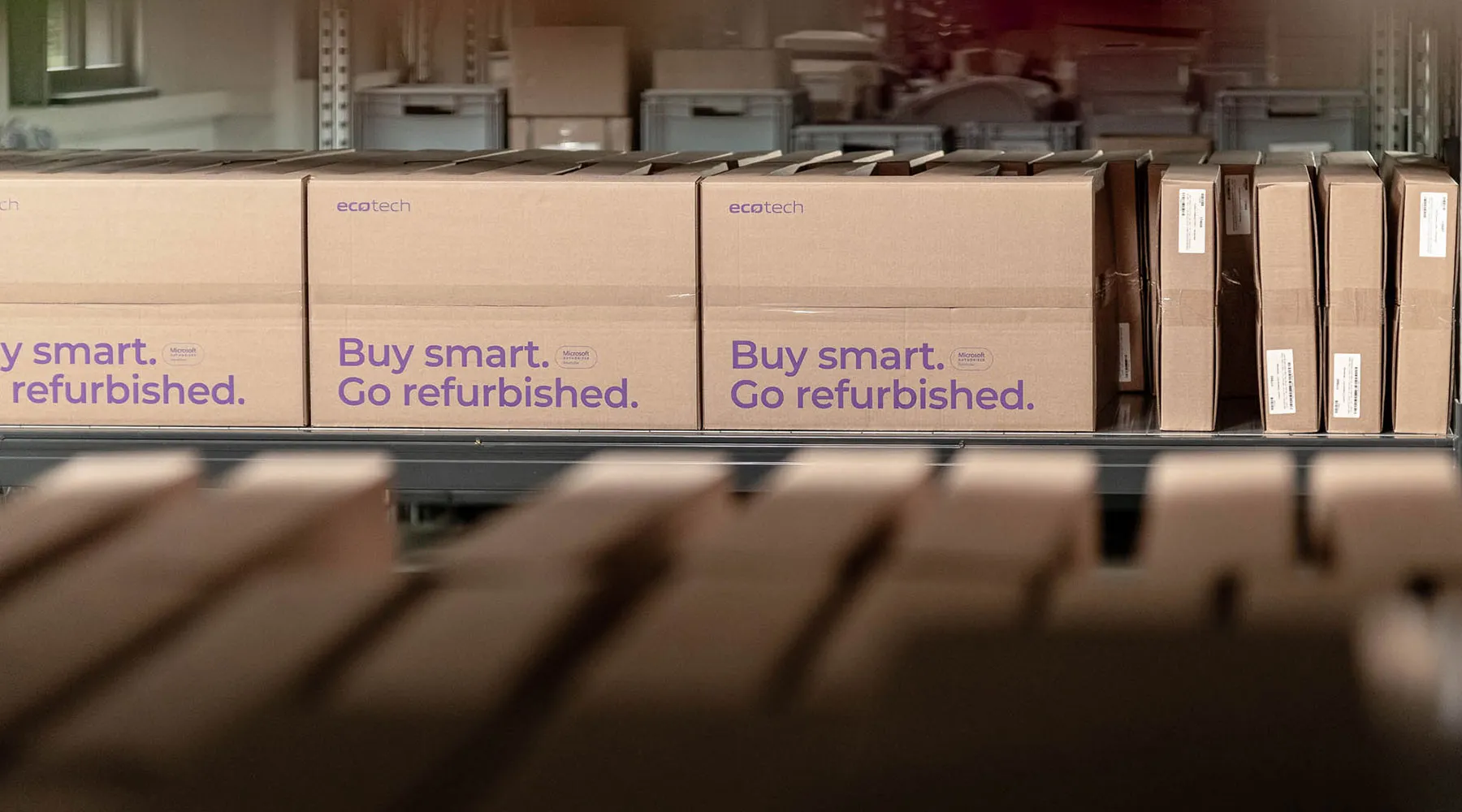
An approach that addresses this very point is refurbished IT. Used business devices are professionally inspected, technically reconditioned, and then put back into use. A laptop or server thus gets a second, sometimes even a third, useful life.
The effect on Scope 3 emissions is clear. No new production is required for the device. Raw materials do not need to be extracted again, and the energy-intensive manufacturing process is avoided. At the same time, the lifespan of existing hardware is extended, and significantly fewer devices end up as e-waste prematurely.
For companies, this has several consequences:
- fewer emissions in the supply chain
- better metrics in ESG reporting and corporate carbon footprint
- reduced costs for business hardware procurement
Refurbished IT thus shifts the focus from rapid device replacement to a longer and more meaningful use of existing technology.
How companies can specifically reduce Scope 3 emissions in IT
The theory behind Scope 3 emissions is easily explained. It only gets interesting when companies actually adjust their IT lifecycle. That's precisely where the levers emerge that directly impact the CO₂ balance and the sustainability report.
Here are some proven approaches:
- Purchase refurbished devices
By opting for professionally refurbished business hardware, companies reduce emissions from the "Purchased Goods" category. In such cases, a new device doesn't even need to be produced. - Systematically return old IT
Instead of stacking or disposing of decommissioned devices in storage, they are returned, inspected, and reused. This reduces e-waste and strengthens the IT circular economy. - Intentionally plan the IT lifecycle
Devices are not automatically replaced as soon as they are depreciated. Many business models remain technically stable for significantly longer. - Integrate lifecycle data into carbon reporting
Knowing how long devices are used and what happens to them after use provides better data for sustainability reports and ESG reporting.
Outdated prejudices about used IT persist
Despite increasing demand, many companies still have reservations about refurbished IT. These often stem from experiences with basic used consumer devices, not professionally refurbished business hardware.
Some common objections include:
- „Refurbished devices are unsafe.“
Professional providers delete data using certified procedures and fully document the process. This ensures sensitive company data remains protected. - "The quality is worse."
Business devices are designed for long lifespans. Many models function perfectly well technically for significantly longer than typical replacement cycles in companies. - "That doesn't fit our IT standards."
Refurbished hardware often comes from large corporate environments. Models, configurations, and spare parts are standardized, making them easy to integrate.
Conclusion: If you're serious about Scope 3, you need to rethink your IT strategy.
Scope 3 emissions largely originate outside the company itself, primarily where products are manufactured, transported, and later disposed of. This proportion is particularly significant for IT hardware, as production and raw materials account for the largest share of the CO₂ footprint.
That's precisely why it's worth looking at the entire lifecycle of devices. By using hardware longer, professionally returning it, and integrating refurbished IT into procurement, companies directly reduce emissions in the supply chain. At the same time, high-performance devices remain in use instead of being replaced prematurely.
Still unsure if refurbished IT is right for your company? Or do you have questions about IT remarketing and the return of your old hardware? Then contact us – we'd be happy to advise you!
FAQ
What are Scope 3 Emissions?

Scope 3 emissions are indirect greenhouse gas emissions across a company's entire value chain. These include, for example, emissions from purchased goods and services, transportation, use, and disposal. For many companies, they account for the largest share of the total carbon footprint.
Why are Scope 3 emissions so high for companies?
Because they cover the entire supply chain. This includes raw material extraction, production, transport, and product disposal. Especially for electronic devices, a significant portion of emissions is already generated during manufacturing.
How can Scope 3 emissions be reduced?
Companies can primarily reduce Scope 3 emissions through their procurement and supply chain. This includes, for example, more sustainable suppliers, longer product lifecycles, a circular economy, and the use of refurbished IT.
What are the CO₂ emissions of a laptop?
Producing a laptop generates approximately, depending on the model, 250 to 350 kg of CO₂. A large portion of these emissions comes from raw materials, production, and transport. The actual use in the office accounts for only a comparatively small share.
What does Refurbished IT mean for businesses?
Refurbished IT consists of professionally refurbished business equipment that is put back into service after inspection and technical refurbishment. This allows companies to save costs, conserve resources, and reduce Scope 3 emissions.