CSR is no longer just a nice-to-have. The majority of CEOs today see sustainability as crucial for their business success. More and more are realizing: Acting responsibly not only strengthens their image, but also saves costs, attracts talent, and secures real market opportunities. Especially in the IT industry, this topic is becoming increasingly urgent, as it contributes significantly to the generation of electronic waste.
What is Corporate Social Responsibility?
Corporate Social Responsibility, or CSR for short, is based on three pillars: Economic, Environmental, and Social aspects and refers to a company's responsibility towards the environment, society, and the economy. It's about combining economic success with social and environmental impact. CSR includes voluntary measures that go beyond legal requirements, such as fair working conditions, environmental and climate protection, ethical conduct in the supply chain, or social commitment.
Companies that actively integrate these areas (economic, environmental, and social) into their strategy are considered responsible and increasingly have an advantage. Because customers, partners, and employees expect exactly that.
Why CSR is becoming increasingly important
CSR is becoming more important because the rules of the game in the B2B sector are changing. Customers, partners, and investors are increasingly paying attention to how responsibly a company acts. Tenders now require ESG criteria, corporations demand proof from their suppliers, and employees want more than just a job – they want purpose and values.
At the same time, regulatory pressure is increasing: The EU-CSRD (Corporate Sustainability Reporting Directive of the European Union) obliges large companies to disclose their sustainability performance, and the Supply Chain Due Diligence Act requires due diligence along the entire value chain.
The topic is particularly relevant in the IT sector: High energy consumption, short product cycles, and large amounts of electronic waste present companies with a clear responsibility. Those who don't have answers here will fall behind professionally, economically, and reputationally.
Benefits of CSR for companies
Sustainable action not only gives you a good conscience but also tangible business advantages, as the following points show:
1. Improved image and clear competitive advantages
With a committed CSR profile, you strengthen your company's image and increase your brand's visibility. Those who demonstrably commit to social and environmental causes, gain trust among customers, business partners, and the public. In a market where many services are comparable, sustainability thus becomes a real differentiator.
Customers are increasingly guided by values and prefer to choose providers who take responsibility. This also applies in B2B: buyers today specifically look for sustainable supply chains because it's embedded in their own guidelines.
CSR gives you a clear advantage. You impress not only with performance but also with your values. This attracts customers who are less price-sensitive, builds trust in partnerships and increases your chances in tenders – especially where ESG criteria are already standard.
2. Stronger Employee Retention and Attractive Employer Profile
CSR also pays off internally. When you take responsibility, you win over your employees. Because today they want more than just a salary: They seek purpose, values, and an environment that aligns with their beliefs. Companies that take sustainability seriously score big here.
Especially young professionals – and thus the talents of tomorrow – specifically look for social and ecological standards. Credible CSR engagement makes you a more attractive employer, strengthens loyalty, and reduces turnover.
Simultaneously, pride grows. When your team sees that the company makes a difference, both big and small, motivation increases. Whether through internal projects, voluntary commitment, or transparent communication: CSR fosters a sense of belonging.
3. Greater Efficiency and Lower Costs
CSR often saves money where you least expect it. When you operate more sustainably, you automatically reduce the consumption of energy, materials, and resources. Less waste, more efficient processes, smarter use of IT – all of this directly impacts your operating costs.
A practical example: If you don't dispose of obsolete hardware, but instead have it professionally refurbished or sell it (for example, to us 🙂), you avoid disposal costs and generate additional revenue. At the same time, you extend the lifecycle of your devices and save on investments in new products.
Quick results are also evident in facility and energy management: Green electricity, optimized infrastructure, or digital processes reduce consumption and ease the budget. Sustainability, therefore, doesn't just mean improvement, but often also saving money.
4. Fewer Risks, More Compliance, and Future-Proofing
CSR helps you identify and actively manage risks early on. Whether it's data protection, supply chain, or environmental standards – when you take responsibility, you act proactively instead of reactively. You not only meet legal requirements like CSRD or the Supply Chain Act, but ideally, you exceed them.
Especially in the IT industry, it's about sensitive data, complex supply relationships, and high regulatory requirements. Those who maintain high standards here protect themselves from reputational damage, fines, or legal consequences.
CSR also strengthens your resilience. When you take responsibility, you build stable partnerships with customers, suppliers, and service providers, who now expect sustainable practices. Such relationships are valuable, especially in times of crisis, because they make you less replaceable and secure long-term contracts and reliability in the supply chain.
5. Innovation and New Market Opportunities
CSR not only makes your company more sustainable, but also more innovative. Those who take responsibility, Challenges the status quo and rethinks processes. For example:
- Does every device really need to be replaced, or can its lifespan be extended through refurbishment?
- Does new hardware really have to be purchased, or is an IT leasing model with a buy-back option worthwhile?
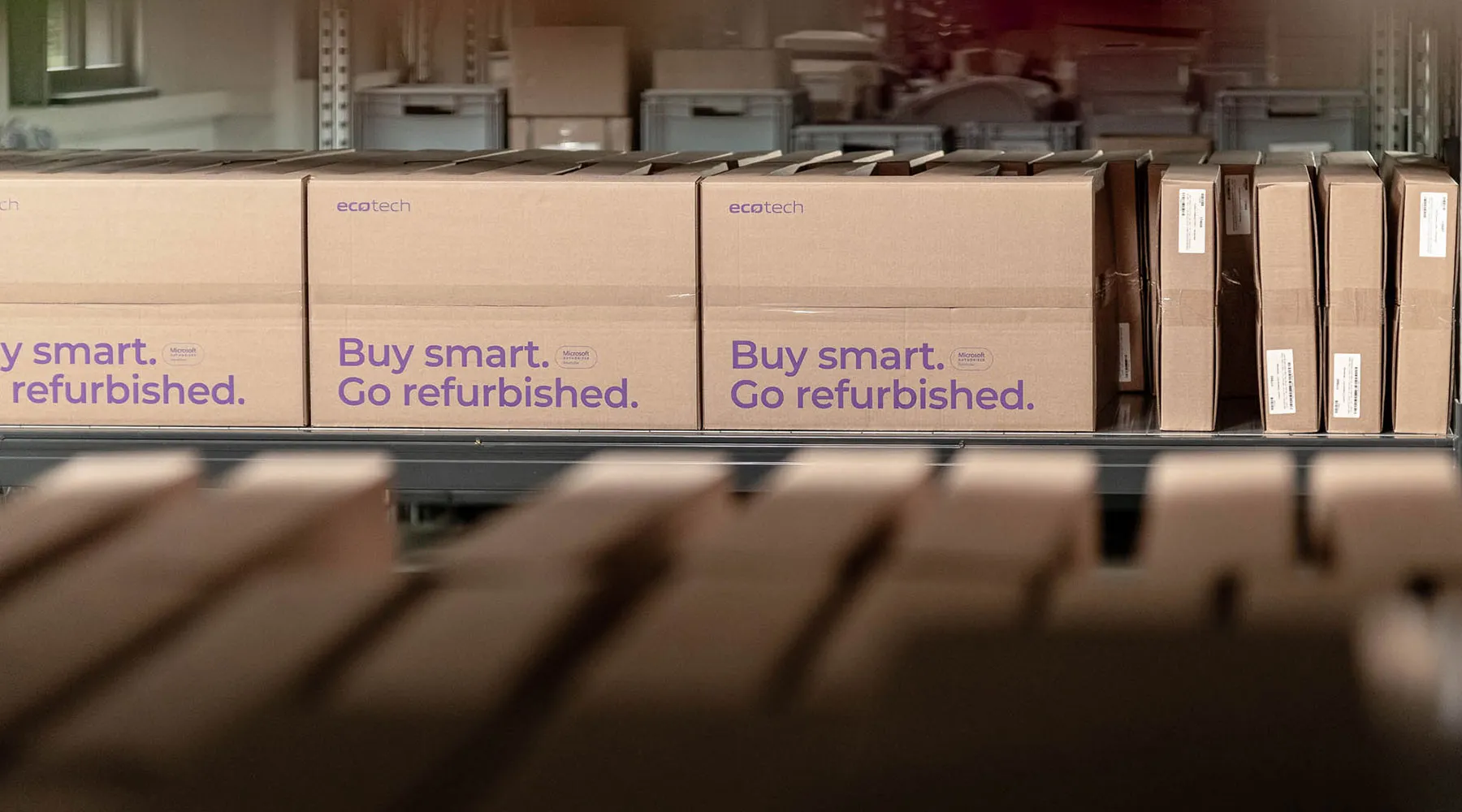
Instead of simply writing off or disposing of obsolete IT, you can have it refurbished by a professional refurbisher like us, refurbished. Devices that would otherwise be e-waste are made usable again and reused as high-quality, tested business hardware. This creates measurable environmental benefits and, at the same time, revenue that you can reinvest.
For IT system houses, leasing companies, or similar service providers, CSR also offers new business models: such as take-back concepts for customer hardware, the targeted sale of high-quality refurbished devices, or integrated service offerings that reflect the circular economy. This not only reduces costs but also new target groups reached – for example, organizations with clear sustainability requirements or customers with limited IT budgets.
Make the IT industry more sustainable with CSR and benefit yourself
Legal requirements, new customer expectations, or your own values – the time for CSR is now! Those who take responsibility, save resources, reduce costs, and strengthen their company from within. This applies not only to corporations but especially to SMEs, system houses, and IT service providers.
A simple and effective lever is the sustainable management of your IT. Because every disposed device contributes to the global e-waste problem (the pile grows by 5% annually!).
We help you leverage these potentials by purchasing your used business IT and upgrading it to premium refurbished IT.
We also handle the secure nationwide transport. We thoroughly inspect every device and securely delete all data. After quality and security tests, you receive a transparent evaluation and a fast payout.
Do you want to know what your old IT equipment is worth? Request a valuation now!
FAQ
What are the benefits of CSR for businesses?

CSR strengthens image, customer loyalty, and employer appeal. It lowers costs, mitigates risks, and improves its position in tenders.
Why is sustainability important in the IT industry?
IT generates high CO₂ emissions and electronic waste. Sustainability reduces environmental impact and meets legal CSR requirements in Germany and the EU.
What CSR initiatives make sense for IT companies?
Energy-efficient data centers, refurbished IT, green procurement, and sustainable supply chains reduce emissions and operating costs.
What CSR obligations apply to companies in Germany?
Large companies are required to report on sustainability under the CSRD and the Supply Chain Due Diligence Act. SMEs need CSR documentation for partners and tenders.
How does refurbished IT contribute to CSR?
Refurbished IT reduces e-waste and CO2 emissions, saves resources, and measurably improves your sustainability footprint.